
Introduction
As technology continues to evolve, the lines between human and machine interaction are becoming increasingly blurred. One of the most groundbreaking advancements is the integration of AI-powered emotion recognition, allowing machines to detect and respond to human emotions in real-time. This technology is revolutionizing sectors such as education, healthcare, customer service, and more.
What is Emotion Recognition in AI?
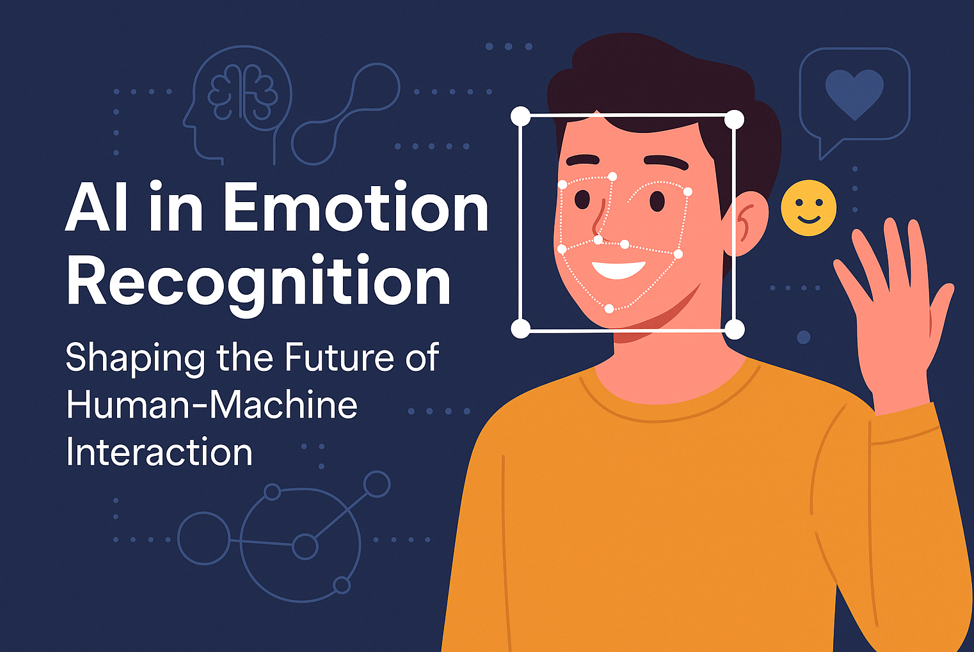
Emotion recognition in AI involves the use of machine learning and deep learning algorithms to identify and interpret human emotions from facial expressions, voice tone, body language, and physiological signals. By analyzing these data points, AI systems can determine whether someone is happy, sad, angry, stressed, or calm, among other emotional states.
How Does AI Recognize Emotions?
AI models are trained on large datasets that include various emotional cues, using technologies such as:
Facial Recognition: Identifying micro-expressions and muscle movements.
Speech Analysis: Examining tone, pitch, and speech patterns.
Natural Language Processing (NLP): Analyzing the emotional tone in written or spoken words.
Biometric Sensors: Measuring heart rate, skin conductance, and more.
Applications of Emotion Recognition
1. Education
Emotion-aware learning platforms can detect when students are confused or disengaged and adjust content delivery in real-time.
2. Healthcare & Mental Wellness
AI systems can monitor patients’ emotional states to detect early signs of depression, anxiety, or stress, enabling timely intervention.
3. Customer Experience
Brands are using AI to tailor interactions based on the customer’s emotional state, increasing satisfaction and loyalty.
4. Automotive Industry
Emotion detection in cars helps monitor driver fatigue, stress, or distraction, improving road safety.
5. Virtual Reality & Gaming
In VR environments, AI can adapt scenarios based on the user’s emotional reactions, offering more immersive and personalized experiences.
Ethical and Privacy Considerations
While emotion recognition holds great promise, it also raises critical concerns:
Data Privacy: Emotional data is deeply personal and must be protected.
Bias & Fairness: AI systems must be trained on diverse datasets to avoid cultural or demographic bias.
Consent: Users should be aware and provide permission before their emotions are analyzed.
Future Outlook
With advancements in multimodal AI, the future of emotion recognition lies in integrating data from multiple sources for higher accuracy. As technology matures, it will play a vital role in enhancing empathy in machines, making human-machine interactions more natural, effective, and human-centric.
Conclusion
Emotion recognition powered by AI is no longer science fiction—it’s a rapidly growing field with the power to reshape how we interact with technology. By responsibly leveraging this innovation, we can build more intuitive, compassionate, and adaptive systems that better serve human needs.





بدون دیدگاه