

Artificial Intelligence has evolved rapidly over the past decade, but 2026 marks the breakthrough year of Autonomous AI Agents. Unlike traditional AI systems that simply respond to prompts, autonomous agents can plan, execute, analyze results, and refine strategies — all with minimal human intervention
We explore what autonomous AI agents are, how they work, real-world use cases, benefits, challenges, and what the future holds.
What Are Autonomous AI Agents?
Autonomous AI agents are advanced AI systems capable of:
- Understanding high-level goals
- Breaking them into structured tasks
- Executing multi-step processes
- Learning from feedback
- Making decisions independently
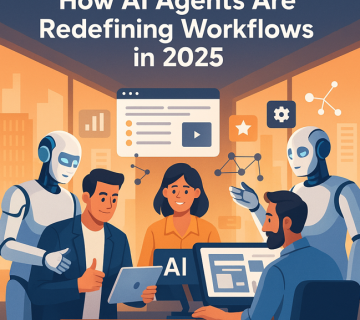
Unlike basic chatbots, these agents operate more like digital employees or assistants.
For example, platforms like OpenAI are developing increasingly capable AI models that can reason, plan, and interact with tools, pushing the boundaries of automation.
How Autonomous AI Agents Work
Autonomous agents typically combine several core technologies:
1. Large Language Models (LLMs)
- They use advanced LLMs to understand instructions and generate responses.
2. Tool Integration
They connect with:
- Web browsers
- APIs
- CRMs
- Databases
- Automation software
3. Memory Systems
Agents maintain short-term and long-term memory to:
- Track tasks
- Remember user preferences
- Improve performance over time
4. Feedback Loops
- They analyze outcomes and refine strategies autonomously.
Key Use Cases of Autonomous AI Agents
1. AI Business Operations Managers
Autonomous agents can:
- Generate marketing campaigns
- Run A/B tests
- Analyze performance metrics
- Adjust ad budgets automatically
Companies are integrating these systems to reduce operational costs while improving efficiency.
2. AI Software Development Assistants
Developers now use AI agents to:
- Write code
- Run tests
- Debug errors
- Deploy applicationsTools inspired by research from DeepMind demonstrate how AI can handle complex problem-solving tasks with minimal supervision.
3. AI Content Creation Engines
Autonomous AI agents can:
- Generate SEO blog posts
- Optimize keywords
- Publish content
- Monitor ranking performance
This transforms digital marketing strategies and accelerates content production pipelines.
4. Personal AI Life Managers
From scheduling appointments to financial tracking, AI agents are becoming personal productivity managers — handling repetitive tasks while humans focus on creativity and strategy.
Benefits of Autonomous AI Agents
- Increased Productivity
- Agents operate 24/7 without fatigue.
- Cost Efficiency
- Reduced need for large operational teams.
- Scalability
- Businesses can scale processes instantly.
- Data-Driven Decisions
- AI agents analyze massive datasets in seconds.
Challenges and Risks
Despite the advantages, several concerns remain:
- Data privacy and security
- Over-reliance on automation
- Ethical decision-making
- Regulatory uncertainty
Organizations must implement governance frameworks to ensure responsible AI deployment.
Why Autonomous AI Agents Matter for Digital Marketing
From an SEO perspective, autonomous AI agents are transforming:
- Keyword research automation
- Content gap analysis
- Competitor monitoring
- Technical SEO audits
Digital marketers who adopt AI agents early gain a significant competitive advantage.
The Future of Autonomous AI Agents
By 2030, experts predict that autonomous AI agents will:
- Manage entire business departments
- Operate smart cities infrastructure
- Collaborate with humans as hybrid teams
- Become personalized digital companions
The transition from “AI as a tool” to “AI as a teammate” is already underway.
Conclusion
Autonomous AI agents represent the next major shift in Artificial Intelligence. Their ability to plan, execute, and optimize tasks independently makes them far more powerful than traditional AI systems.
Businesses, developers, and marketers who understand and implement this technology early will lead the next wave of digital transformation.
The question is no longer if autonomous AI agents will reshape industries — but how fast they will do it.






بدون دیدگاه